How to make money in ROB RUN: the loops that actually pay
Seven income routes ranked by risk, from dumpster cash to contraband repacking, with the real numbers where sources exist.
The reliable early loop is dumpsters and small stores → fence the loot → launder the cash. Mid-game money comes from cargo (sell to the Smuggler or open at a Cargo Workbench) and from contraband repacking. Late-game money is taxes: settlement and district ownership.
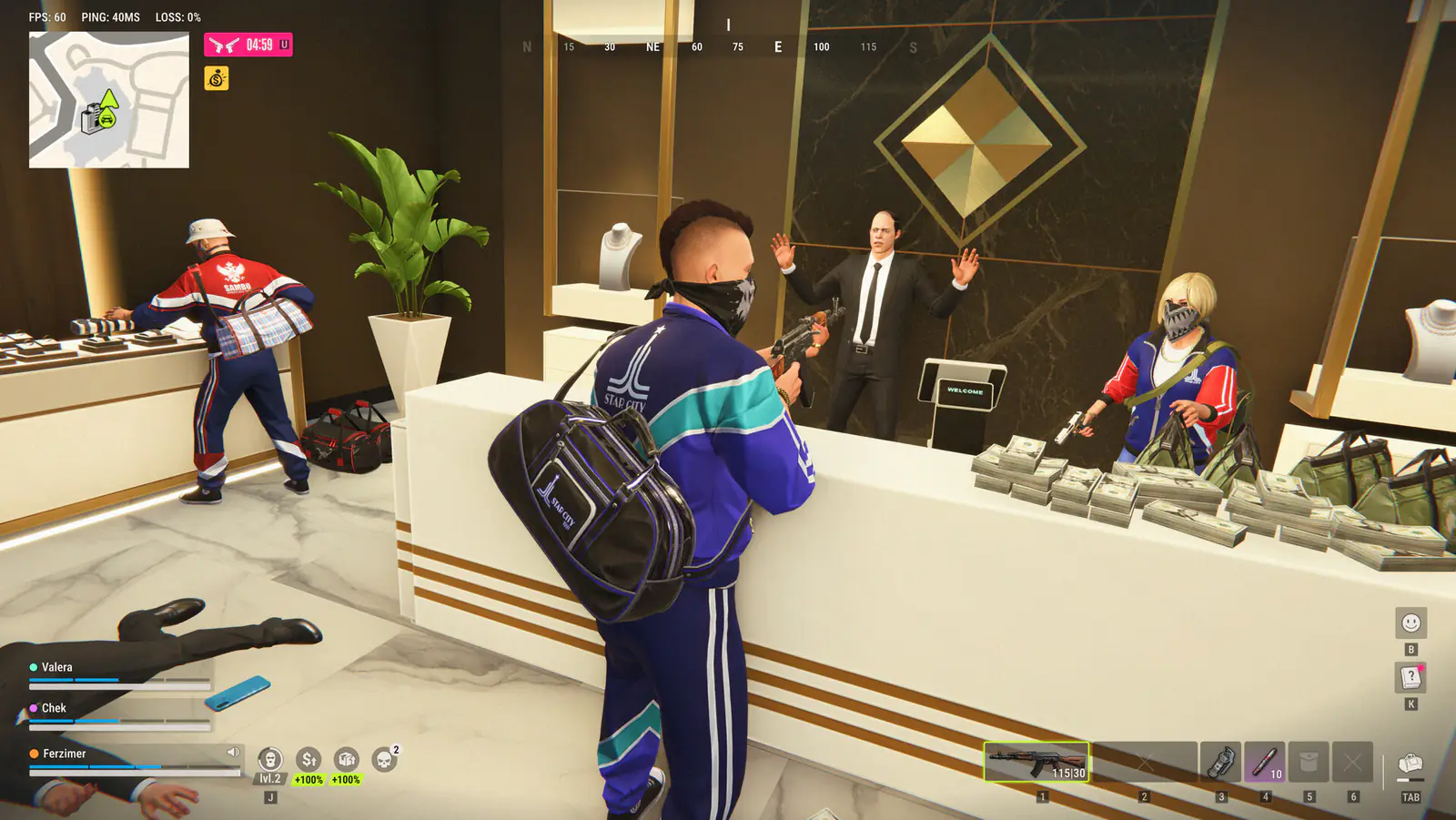
Kefir’s own line is that progression is structured around money. That makes this the most important page in the dossier, and the one where bad guides do the most damage — most of them quote a single payout without telling you the risk or the time cost.
The income ladder
| Route | Realistic scale | Risk | Needs |
|---|---|---|---|
| Dumpster cash | Small, fast, repeatable | Low | Nothing — Kefir increased dumpster cash on 4 Nov |
| Store registers | Small to medium | Low–medium | Mask, a quiet entry, an exit |
| House and safe robberies | Medium to high | Medium | Lockpicks, keys, decoder for security systems |
| Cargo delivery | $25,000–$500,000 listed value | High — you carry it | A vehicle, a route, a Smuggler |
| Cargo opening | More than selling raw, but time-gated | Medium | Plot, Cargo Workbench, 10 s–60 min |
| Contraband repacking | ≈$35,000 per batch reported | Medium | Contraband Workbench ($40,000 setup) |
| Taxes | Passive, scales with other players | Political | Settlement or district ownership |
Listed cargo values are pre-bonus delivery revenue from community databases; the Smuggler applies location and Notoriety bonuses.
The first hour: dumpsters, registers, fence
- Search dumpsters on the way in Free, low-risk, and buffed in the 4 November change list. This is the intended first income.
- Rob one small target, not three Notoriety climbs with every crime in a single visit. One clean robbery and an exit beats a spree that ends in a cell.
- Fence the loot The Fence converts stolen goods to cash. Selling requires the mask on, according to community guides.
- Bank or launder immediately Cash in the bag is the most stealable thing in the game.
Cargo: the mid-game engine
Cargo has two exits. Sell it to the Smuggler for fast cash, or open it at a Cargo Workbench for the contents — which include items you cannot buy on the Black Market and need for settlement upgrades. Opening takes between ten seconds and an hour depending on the crate.
- A Unique Collection Crate lists at $500,000; a Golden Statue at $250,000; an Expensive Safe at $200,000.
- Common crates (Alcohol, Electronics, Equipment, Jewelry, Medications, Spare Parts) list at $25,000–$40,000.
- The Smuggler pays more at high Notoriety — up to 50% more at the top level, per community testing.
- Deliveries fill a Cargo Sheet; a full sheet sells for a good price and requires a level 2 settlement or higher.
Full tables and open times are in the cargo guide.
Contraband: the compounding business
Buy damaged Contraband Cargo for roughly $5,000–$10,000, repack it at a Contraband Workbench for 30 minutes, and sell the resulting Premium Cargo. Reported value: about $35,000. Setup is the barrier: $20,000 research plus $20,000 purchase for the workbench, and a building with a free station slot.
Roulette: gambling, not income
The Bar has a roulette wheel with chips at 1,000 / 5,000 / 25,000 / 50,000 / 100,000. Kefir’s disclosure says it uses virtual in-game currency only. Expected value is negative by design; treat it as entertainment with a fixed budget, never as a money method.
The endgame is other people’s money
Settlement owners collect taxes on laundered money and Black Market purchases. District owners take a cut of every settlement owner’s taxes on their turf. The Shadow Governor taxes every other clan on the map. No robbery in the game scales like a tax base.
What actually loses money
- Carrying cargo through a chokepoint without scouting the exit first.
- Chaining robberies for Notoriety and then dying with the whole bonus in the bag.
- Selling collection items individually instead of packing a collection crate.
- Selling green decoders for cash when three of them barter into a purple.
- Building a lavish base before you have a laundering routine.
FAQ
What is the fastest way to make money in ROB RUN?
Early on, dumpsters and one small store robbery, fenced and laundered the same session. Later, cargo delivery and contraband repacking pay more but require a vehicle, a plot and time.
How much is a full cargo crate worth?
Listed delivery revenue ranges from about $25,000 for common crates to $500,000 for a Unique Collection Crate, before Smuggler location and Notoriety bonuses.
Is the roulette profitable?
No. It is a virtual-currency gambling mechanic with negative expected value by design.
What is the best passive income?
Taxes. Settlement owners tax laundered money and Black Market purchases; district owners take a cut of settlement taxes.
ROB RUN cargo: open it or sell it?
The two exits for every crate, the values that matter, and how to unlock the Cargo Workbench without wasting $40,000.
ROB RUN decoder: how to get one and how base raids work
Decoders are the raid key to other players’ bases. Where they come from, what each tier breaches, and how to make your own base expensive to hack.
ROB RUN bank account: how money actually gets safe
There is no signup form. The bank account is the destination of the Laundering Desk — here is the real flow, and what it protects.